Survey: Gen Z and Millennials Turn to AI, Gambling to Address “Crushing Debt”
10/06/2026 / By Sterling Ashworth

A new survey released by National Debt Relief and Wakefield Research found that large shares of younger U.S. adults are turning to gambling and artificial intelligence (AI) to address financial strain, according to the report.
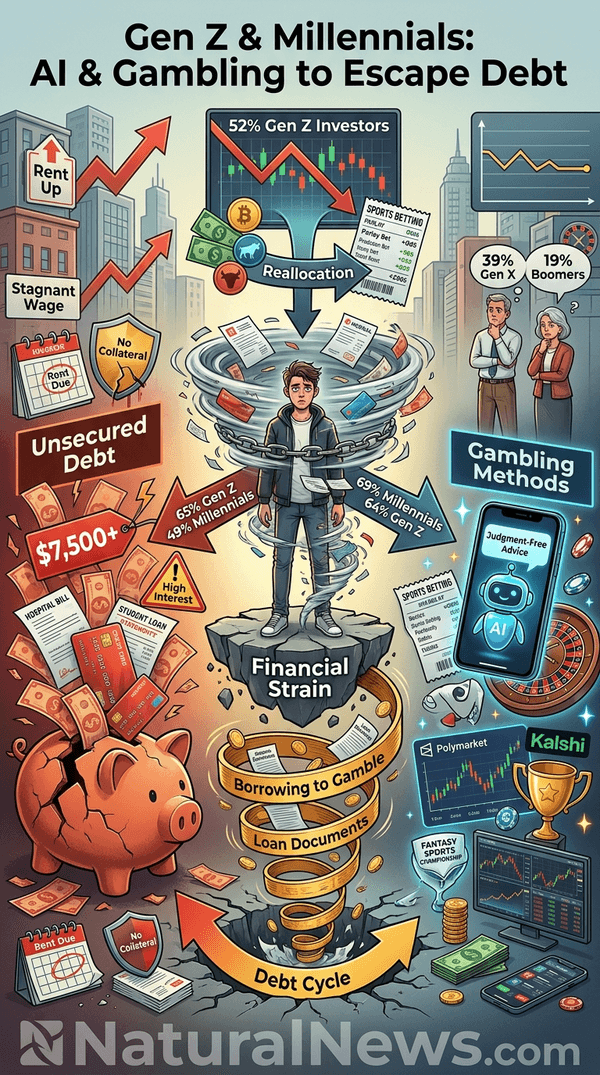
The survey of 2,000 U.S. adults age 18 and older found that 65% of Gen Z and 49% of millennials who gamble said they did so to try to eliminate debt, compared with 39% of Gen X and 19% of boomers, the report stated.
The report described these activities, such as sports betting, prediction markets, fantasy sports, day trading, and casino gambling, not merely as hobbies or addictions but as financial survival strategies for cash-strapped adults, according to the poll [1].
The findings reflect a generational divide in how people attempt to manage debt, the report stated.
Survey Details and Debt Burden
The survey found that more than a third of millennials (38%) and over a quarter of Gen Z (27%) with unsecured debt owe $7,500 or more [2].
Unsecured debt includes credit cards and medical bills, according to the survey [2].
The survey found that 69% of millennials and 64% of Gen Z adults have used AI for guidance about financial challenges or money struggles [3]. The report cited “judgement-free advice” and AI’s “approachability” as major draws for younger adults managing money matters, according to the survey [1].
More than 60% of AI users in these younger groups said quick answers were a major advantage, according to the survey [3].
Gambling as a Debt Strategy
The report listed sports betting, prediction markets such as Polymarket and Kalshi, fantasy sports, day trading, and casino gambling as methods younger adults use, according to the poll [1].
National Debt Relief said that with others also borrowing to gamble, younger generations risk falling into a debt cycle, according to the firm [5].
A growing share of young Americans is folding sports gambling into their long-term financial plans, according to new research from the investment platform Betterment.
In an online survey of 1,000 U.S. retail investors conducted in late March and early April and released this week, 52% of Gen Z investors said they had shifted money originally set aside for stocks or other investments into sports wagers over the past year [6].
Debt Relief Response and Conclusion
The survey was released by National Debt Relief and Wakefield Research [1].
The report noted a generational divide in perceptions of financial security, with younger adults far more likely than older generations to treat gambling as a debt-elimination strategy and to confide in algorithms rather than humans about money troubles [7].
Experts Give Financial Tips to Gen Z and Millennials Struggling With Debt
Gen Z and millennials have significant spending power, but easy access to credit, digital wallets, and buy now, pay later services can make it easier to overspend. Experts advise that building mindful money habits can help younger adults manage debt and strengthen their financial wellness [8].
According to experts, you should start by understanding the difference between debit and credit cards. A debit card uses money already available in your bank account, while a credit card lets you borrow money that must be repaid. Carrying a credit card balance can lead to interest charges, while missed payments may affect your credit score [8].
Digital wallets can also encourage impulse purchases. Consider keeping just one digital wallet and linking a single card to it. Experts say your purchase notifications can provide an extra reminder whenever money leaves your account [8].
Buy now, pay later plans can make larger purchases feel more manageable, but multiple plans can quickly add up. Before using one, calculate the total amount owed and make sure the payment schedule fits comfortably within your budget [8].
If credit card debt is already piling up, experts advise consumers to consider using either the snowball or avalanche method. The snowball method targets the smallest balance first, while the avalanche method focuses on the highest interest rate. Both can provide a structured path toward reducing debt [8].
Finally, experts advise shoppers to practice mindful consumption. Before making a purchase, pause and ask whether you truly need it, whether you can afford it, and whether it fits your financial goals [8].
Small changes in spending habits can make managing money feel more achievable.
References
- “Gen Z and millennials turn to AI, gambling to try to tackle thousands in debt: study”. NYPost.com. September 30, 2026.
- “Gen Z and Millennials Turning To Gambling and AI For Financial Help”. October 3, 2026.
- “Younger Adults Are Turning to AI and Risky Bets to Manage Debt”. ActionNetwork.com. October 5. 2026.
- “65% of Gen Z bettors gamble to pay off debt, survey finds”. InfoBets.com. October 5, 2026.
- “Nearly 9 in 10 Millennials and Almost 8 in 10 Gen Z Carry Debt, Reshaping Their Approach to Money, Love and the Future”. NationalDebtRelief.com. September 30, 2026.
- “More Than Half Of Gen Z Investors Have Moved Money Into Sports Bets”. August 16, 2026.
- “Gen Z and Millennials Turn to AI and Gambling to Try to Tackle Thousands in Debt, Study Finds”. Pulptastic.com. October 1, 2026.
- “6 Financial Tips for Gen Zers and Millennials to Save More Money”. Synchrony.com. May 16, 2026.
Explainer Infographic
Submit a correction >>
Tagged Under:
AI, artificial intelligence, bubble, casino gambling, Collapse, day trading, debt bomb, debt collapse, fantasy sports, finance, financial distress, gambling, Gen Z, lifestyle, market crash, millennials, money supply, pensions, prediction markets, risk, sports betting, Zoomers
This article may contain statements that reflect the opinion of the author
RECENT NEWS & ARTICLES