UAE warns residents of jail time for spreading unverified information online
03/10/2026 / By Laura Harris

- The United Arab Emirates warned its nearly 10 million residents that sharing unverified information online could result in prison time following recent missile and drone attacks on the country.
- On Feb. 28, the UAE Public Prosecution said spreading rumors or information from unknown sources on social media is a criminal offense, including reposting or sharing such content.
- The UAE National Media Authority urged residents to avoid filming or sharing unverified images, videos or audio and to rely only on official government sources for information.
- Under Federal Decree-Law No. 34 of 2021 on Countering Rumors and Cybercrimes, offenders can face at least one year in prison and a fine of 100,000 dirhams ($27,000), rising to two years and 200,000 dirhams if misinformation spreads during crises.
- Critics say the law’s broad wording does not distinguish between deliberate disinformation and accidental sharing of unverified content, which may discourage residents, journalists and workers from sharing firsthand information during emergencies.
The United Arab Emirates (UAE) has warned its nearly 10 million residents that sharing unverified information online could lead to prison time, as authorities seek to control the flow of information following recent attacks on the country.
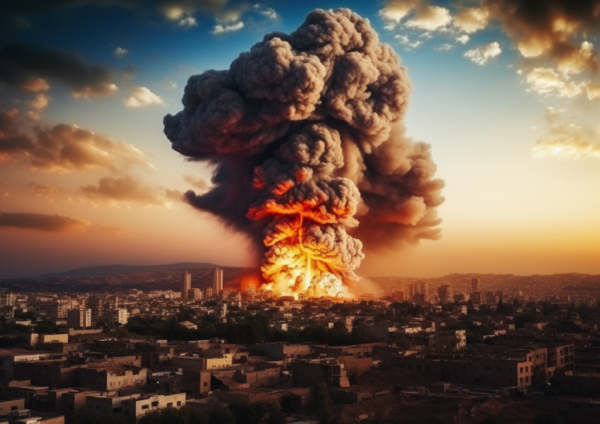
On Feb. 28, as Iranian ballistic missiles and drones struck the UAE for the first time, the UAE Public Prosecution issued a statement reminding residents that spreading “rumors and information from unknown sources through social media platforms or any other technological means” is a criminal offense under federal law. The warning applies not only to individuals who create false or misleading posts but also to those who repost or share such content online.
The UAE National Media Authority (UAENMA) also issued a similar reminder to the public.
Authorities specifically warned against filming, recording, posting, reposting or circulating visual or audio materials, media content or rumors that have not been verified. The circular also advised the public to rely solely on official UAE government channels and institutions when sharing information on social media or digital platforms. Content that incites hostility, spreads misleading information, abuses others or violates public interest and privacy should not be circulated.
Residents who observe issues related to public or state security have been advised to report them to the State Security Department through its hotline at 8006600.
“Information is a responsibility, and spreading rumors is a crime,” the Public Prosecution said, directing residents to get their information “solely from official and accredited sources.”
Broad UAE cybercrime law blurs disinformation and mistake
The rule is based on Federal Decree-Law No. 34 of 2021 on Countering Rumors and Cybercrimes, which was enacted before the recent attacks and is not an emergency measure introduced in response to the conflict.
Under the law, individuals found guilty of publishing or sharing false, misleading or unverified information online can face a minimum sentence of one year in prison, along with a fine of at least 100,000 UAE dirhams (about $27,000).
If such misinformation stirs public opinion against state authorities or occurs during crises or disasters, the penalty increases to a minimum of two years in prison and a fine of 200,000 dirhams ($54,000).
However, the statement does not distinguish between deliberate disinformation and unintentional sharing of unverified content.
Deliberate disinformation, as BrightU.AI‘s Enoch defines, involves the intentional spread of false information to deceive and harm, often with a specific agenda, while the unintentional sharing of unverified content occurs when individuals spread information without verifying its accuracy, often due to a lack of critical thinking or a desire to believe a narrative.
Dan Frieth wrote in his article for Reclaim the Net that the law’s broad language could discourage residents from posting firsthand accounts during emergencies, such as sharing images of fires or damage near their homes to alert relatives overseas. The warning could also affect how journalists, workers and residents share information during unfolding events. Individuals may hesitate to post images or details from incidents, such as debris near buildings or disruptions at airports, until authorities confirm the information publicly.
“The message to the UAE’s millions of residents is, as the original reporting notes, unambiguous: In a crisis, what you retweet can be as legally consequential as what you write. What it doesn’t mention is that the government gets to decide, after the fact, what counts as a rumor,” Frieth concluded.
Watch this clip about U.S. President Donald Trump’s alliance with Saudi Arabia.
This video is from the Rick Langley channel on Brighteon.com.
Sources include:
Submit a correction >>
Tagged Under:
big government, chaos, conflict, Dangerous, fake news, imprisonment, Middle East, national security, politics, UAE, United Arab Emirates, violence, WWIII
This article may contain statements that reflect the opinion of the author
RECENT NEWS & ARTICLES